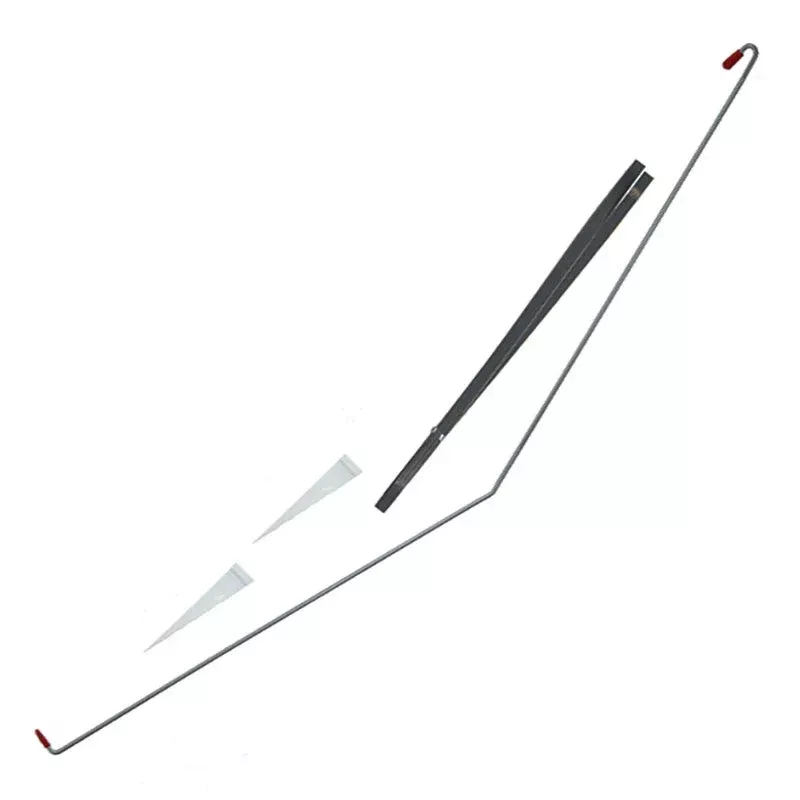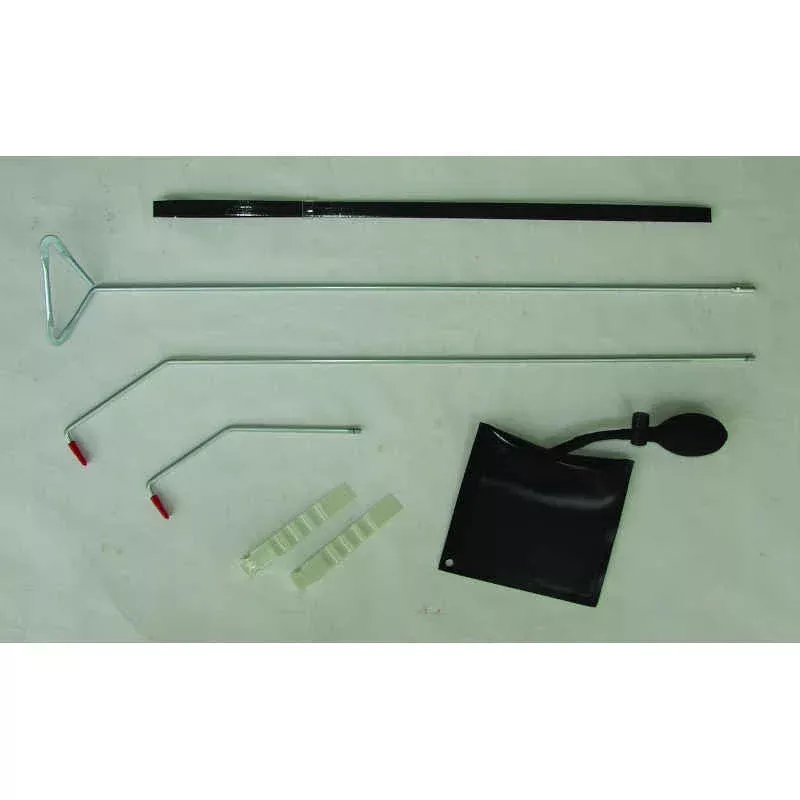
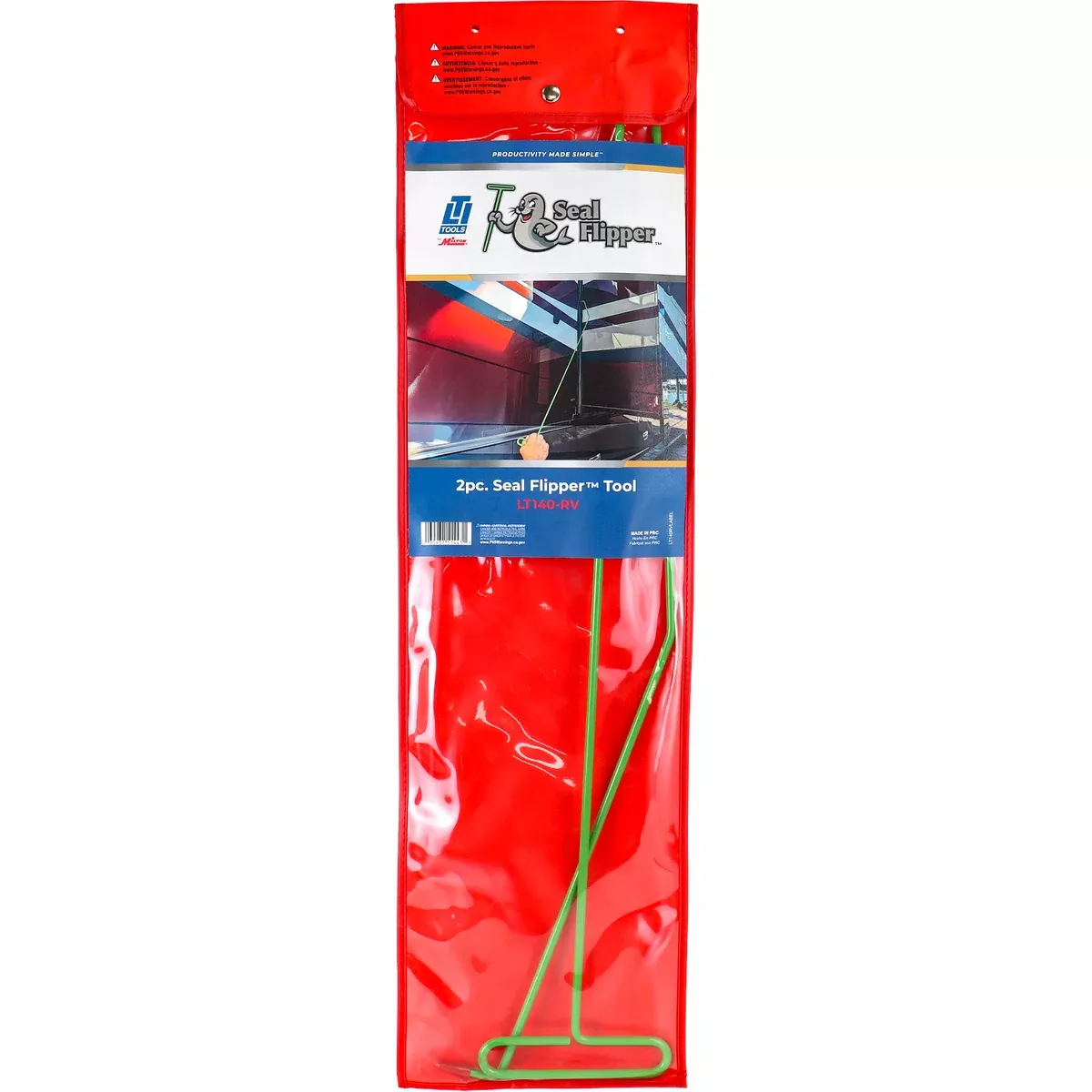
Slide-outs on Class A, B, and C motorhomes often develop twisted or misaligned rubber seals during extension.The LT140-RV Seal Flipper™ allows you to straighten slide-out seals safely from the ground—eliminating ladder useand reducing fall risk—while helping prevent leaks, drafts, and premature seal wear.
- No ladder required: Straighten seals from ground level to reduce slip and fall risk
- Extended reach: Makes it easier to service multi-slide motorhomes
- Helps prevent water intrusion and drafts: Supports a tighter weather barrier
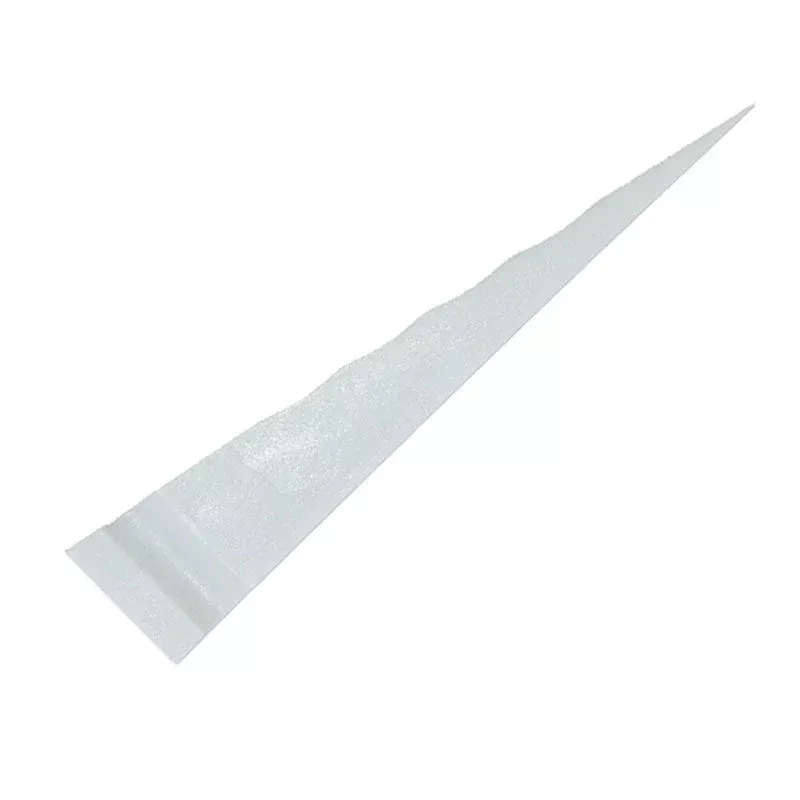
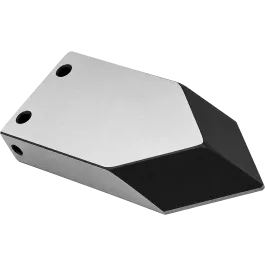
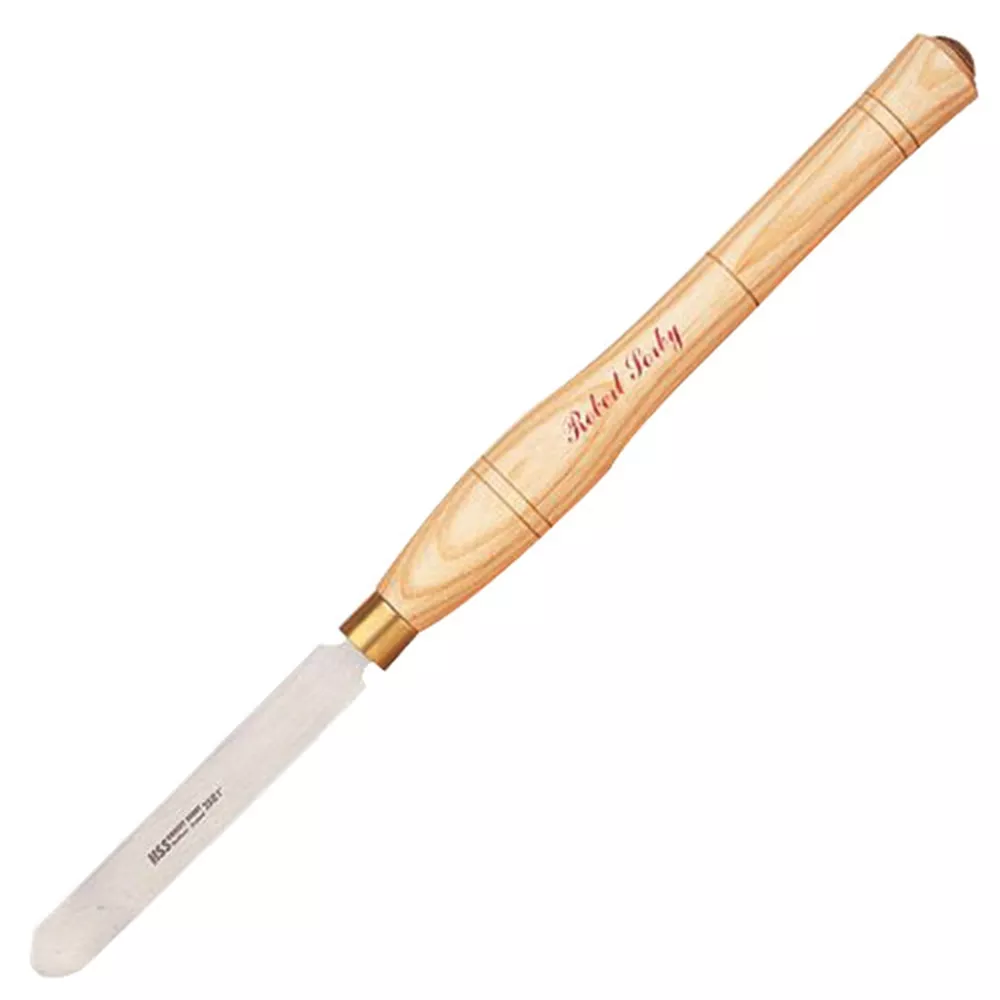
- Soft-tipped whale-tail working surface: Smooth, controlled seal repositioning without scratching
- Screw-together design: Breaks down for compact RV compartment storage
What Is the LT140-RV Seal Flipper™?
The LT140-RV Seal Flipper™ is a ground-level maintenance tool designed to straighten twisted or compressedslide-out seals on Class A, B, and C motorhomes. It eliminates the need for ladders while allowing RV ownersto quickly reposition seals during setup, extension, or retraction.
Addressing a Common RV Problem
Slide-outs add living space, but they also introduce additional seams and rubber seals exposed to the elements.Over time, seals can twist, compress, crack, or shift—especially during extension and retraction.When seals are misaligned, they can lead to:
- Water intrusion: Misaligned seals may allow moisture into the RV, increasing risk of interior or structural damage.
- Drafts and air leaks: Poor seal positioning can reduce comfort and efficiency.
- Seal compression or tearing: Twisted seals can bind, crack, or wear prematurely and may affect slide retraction.
Why It’s Safer Than Traditional Ladder Methods
Traditionally, correcting twisted seals requires climbing and repositioning a ladder multiple times per slide-out.For RVs with multiple slide-outs, this can mean repeated climbs and added safety risk.The LT140-RV eliminates ladder dependency by keeping both feet firmly on the ground during seal adjustment.
How the Seal Flipper™ Improves Safety and Efficiency
- Ground-level operation: Adjust seals without climbing—reduces slip and fall risk.
- Extended reach: Helps reach seals more easily on taller RVs and multi-slide setups.
- Soft-tipped whale-tail design: Maximizes surface contact for smooth, controlled seal positioning without scratching.
- Protects seal life: Proper alignment helps reduce tearing, cracking, and compression damage.
- Compact storage: Modular screw-together construction breaks down for easy RV compartment storage.
Common RV Slide-Out Seal Questions
-
Why do slide-out seals twist?
Seals can shift during extension and retraction due to friction, temperature changes, and normal wear—especially on multi-slide RVs.
-
What happens if a seal stays twisted?
Misaligned seals can lead to water intrusion, drafts, premature seal wear, and slide retraction issues.
-
Do I need a ladder to fix twisted seals?
Not with the LT140-RV. It’s designed to reposition seals from the ground to reduce fall risk.
Designed for Class A, B & C Motorhomes
Most Class B and C RVs—and many Class A motorhomes—have one or more slide-outs surrounded by rubber sealsdesigned to keep water and air out. When extending the slide, seals can twist and need repositioning before retracting.
Without the right tool, owners typically climb and move a ladder multiple times per slide-out to pry seals back into place.The LT140-RV Seal Flipper™ helps complete this adjustment safely from ground level.
By simplifying seal maintenance and reducing ladder use, the LT140-RV helps protect your RV investment and supportsmore consistent seal performance over time.
Need Help? Call 724-941-0941
-
Will this work on Class A, B, and C RV slide-outs?
-
How do I straighten a twisted slide-out seal safely?
-
What helps prevent water intrusion around slide-outs?
-
How do I reduce seal tearing and compression damage?