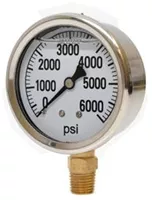
When you’re diagnosing hydraulic problems on modern tractors and combines, you need a pressure gauge that can handle the extreme pressures these systems operate under. Modern tractors have hydraulic systems operating at pressures exceeding 3,000 PSI, and this 6000 PSI gauge gives you the range to safely test even the highest-pressure circuits without maxing out the dial. Whether you’re troubleshooting a sluggish loader, checking relief valve settings, or testing hydraulic motor performance, this professional-grade gauge gets you the accurate readings you need.
What You’re Getting
- 6000 PSI range handles the highest hydraulic pressures found in agricultural equipment
- Liquid filling eliminates needle flutter and vibration for steady, readable measurements
- Stainless steel construction resists corrosion from hydraulic fluids and weather exposure
- 2.5-inch diameter face provides clear readings even in dusty shop conditions
- Professional quality that maintains accuracy through thousands of test cycles
Built for Real Farm Work
This gauge is essential for servicing hydraulic systems on modern tractors, combines, balers, and other high-pressure equipment where standard gauges simply can’t handle the load. These systems are engineered to handle high pressures and flow rates that require professional-grade testing equipment. It’s perfect for shops that work on everything from compact utility tractors to large row-crop machines where hydraulic performance is critical for loader work, implement operation, and precision farming applications.
Made to Last
Farm shops are tough environments with dust, temperature changes, and constant vibration from equipment. This gauge is built to handle those conditions while maintaining accuracy. The liquid filling not only dampens vibration but also lubricates internal components for extended service life, while the stainless construction won’t corrode when exposed to hydraulic fluids or shop chemicals.
Good to Know
This is a test gauge designed for diagnostic work, not for permanent installation in hydraulic systems. Always use proper safety procedures when connecting to live hydraulic circuits—these systems can cause serious injury if handled improperly. Make sure your test hoses and fittings are rated for the pressures you’re testing, and never exceed the gauge’s maximum rating.